General News - Project 63
Unexpected Many Hands
19th November 2016
Sunday last was a bit of a shock for yours truly. Having just returned from India, where the temperature ranged from 26 - 32 degrees, Sunday morning at sub 5 degrees on the allotment truly wakes you up.
With the principal growing season behind us, there is now a list of things to do in preparation for next year, together with general tidying up and completing all those jobs, that either didn't quite get started, or alternatively didn't quite get finished!
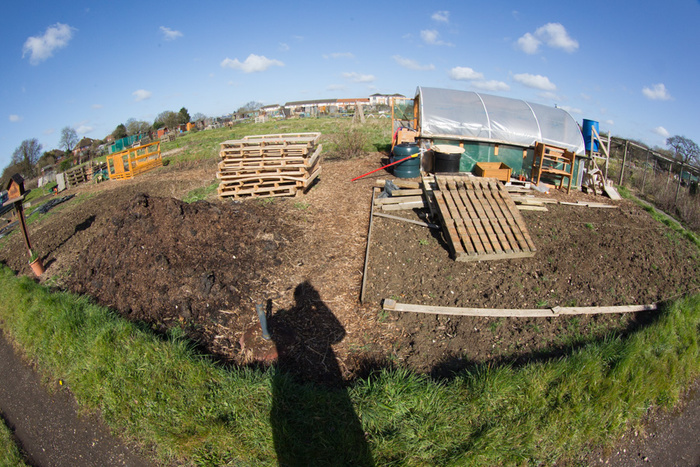
Unexpectedly the Community Payback Scheme seemed to have spare capacity, with a commitment elsewhere falling through. With all the many additional hands, the team completed the pathways at the rear of the site, plus added an additional border mid plot between the growing area and wildlife feature, before tidying all the pathways up at the top of the site with barrow loads of shredding.
The group also took the top off, dug over and motivated a section of a neighbouring plot, Hat's off all round.
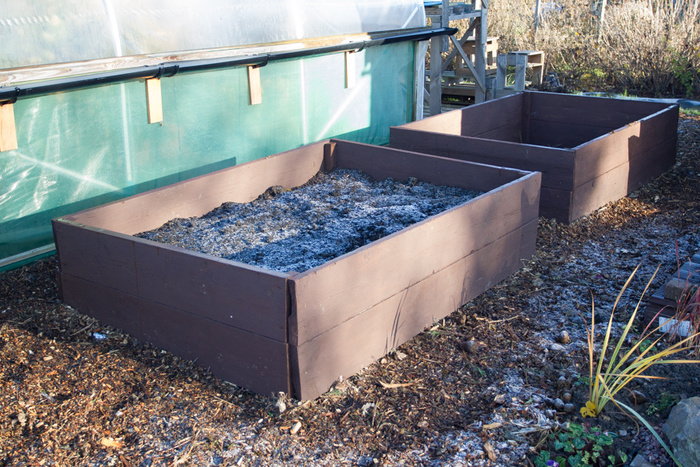
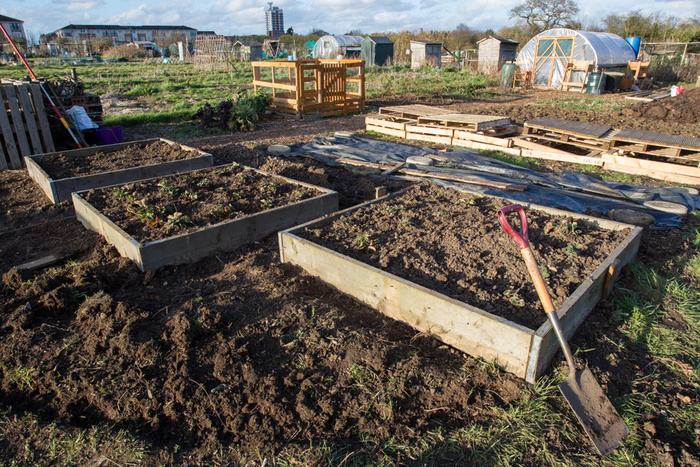
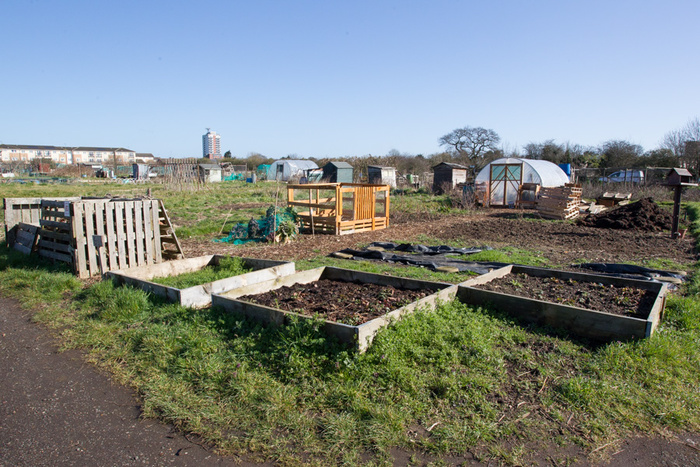
In terms of project 63, the CPS team have built raised beds at the top of the site, the plot is beginning to look similar to the original drawings that we set out at the start of the year, although now looking a little bare for the winter months.
The courgettes and squashes, which had been pretty prolific were now finished, and these dug up, the soil turned over and heavily manured in preparation for next year. Garlic and Broad Beans have been planted, the former relying on frosts to form the cloves, and the broad beans to encourage an early crop, free from black fly that seemed to plague the crop last year.
The Tomatoes and aubergine plants have in the majority been dug out, and the soil turned over in the poly tunnel, which leaves Chilli's ripening off and peppers, but expecting this to finish soon.
Once again, a big thank you to Brian and his team, for this weeks endeavours which were wholly unexpected but hugely welcome.
19th November 2016
In: Project 63
Sunday last was a bit of a shock for yours truly. Having just returned from India, where the temperature ranged from 26 - 32 degrees, Sunday morning at sub 5 degrees on the allotment truly wakes you up.
With the principal growing season behind us, there is now a list of things to do in preparation for next year, together with general tidying up and completing all those jobs, that either didn't quite get started, or alternatively didn't quite get finished!
Unexpectedly the Community Payback Scheme seemed to have spare capacity, with a commitment elsewhere falling through. With all the many additional hands, the team completed the pathways at the rear of the site, plus added an additional border mid plot between the growing area and wildlife feature, before tidying all the pathways up at the top of the site with barrow loads of shredding.
The group also took the top off, dug over and motivated a section of a neighbouring plot, Hat's off all round.
In terms of project 63, the CPS team have built raised beds at the top of the site, the plot is beginning to look similar to the original drawings that we set out at the start of the year, although now looking a little bare for the winter months.
The courgettes and squashes, which had been pretty prolific were now finished, and these dug up, the soil turned over and heavily manured in preparation for next year. Garlic and Broad Beans have been planted, the former relying on frosts to form the cloves, and the broad beans to encourage an early crop, free from black fly that seemed to plague the crop last year.
The Tomatoes and aubergine plants have in the majority been dug out, and the soil turned over in the poly tunnel, which leaves Chilli's ripening off and peppers, but expecting this to finish soon.
Once again, a big thank you to Brian and his team, for this weeks endeavours which were wholly unexpected but hugely welcome.
Brian and Team's Big Thank you.
24th October 2016
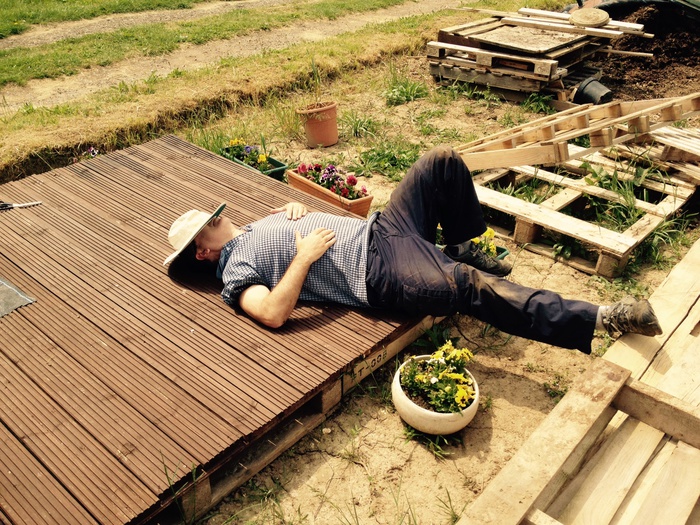
Brian and his colleagues from the Community Payback Team came up trumps again this Sunday with some further considerable assistance for the man with a plan that can't (pictured directing proceedings, and some would say in familiar pose!).
Project 63 has focused for some time on ensuring that we had sufficient fruit and vegetables to donate to our chosen charity, and in between times various practical activities have been undertaken to get us up to speed, not least of which was the edging and pathway building undertaken by Brian and the team a couple of months ago. This weekend, the focus was on the top end of the plot, with two 6' by 4' raised beds built out of remaining scaffold boards, plus further tidying up of the pathway at the shed end of the plot to ensure that there is a natural route through the site.
In addition to this and beyond project 63, the team also took the top off a newcomer's plot and then rotivated which provides a great opportunity for the new plot owner to make a decent start to their endeavours.
I would once again like to offer out a big vote of thanks to Brian and the team for all the effort and energy put into Sunday, which is hugely appreciated.
24th October 2016
In: Project 63
Brian and his colleagues from the Community Payback Team came up trumps again this Sunday with some further considerable assistance for the man with a plan that can't (pictured directing proceedings, and some would say in familiar pose!).
Project 63 has focused for some time on ensuring that we had sufficient fruit and vegetables to donate to our chosen charity, and in between times various practical activities have been undertaken to get us up to speed, not least of which was the edging and pathway building undertaken by Brian and the team a couple of months ago. This weekend, the focus was on the top end of the plot, with two 6' by 4' raised beds built out of remaining scaffold boards, plus further tidying up of the pathway at the shed end of the plot to ensure that there is a natural route through the site.
In addition to this and beyond project 63, the team also took the top off a newcomer's plot and then rotivated which provides a great opportunity for the new plot owner to make a decent start to their endeavours.
I would once again like to offer out a big vote of thanks to Brian and the team for all the effort and energy put into Sunday, which is hugely appreciated.
Team effort makes light work of scaffold boards
28th August 2016
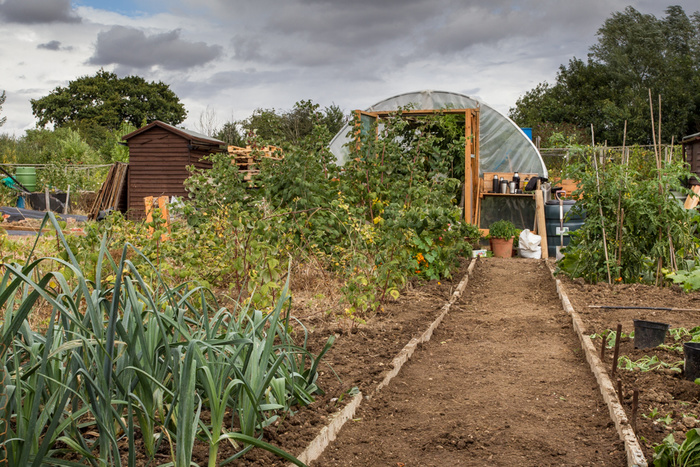
I am conscious that there has been a little bit of a broadcasting gap in relation to Project63, and hope that this small piece will bring everything up to speed.
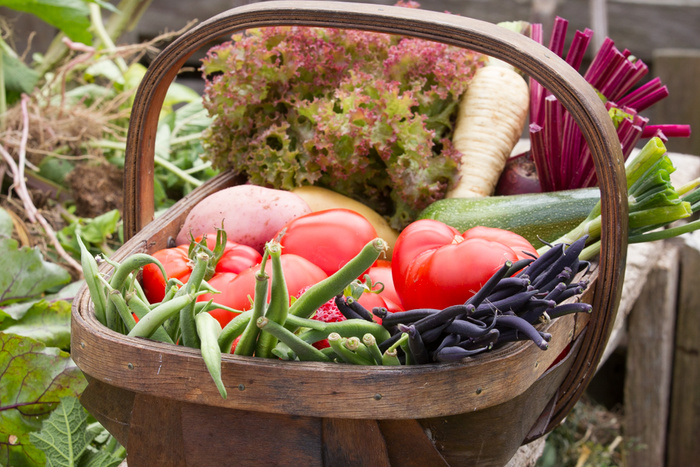
The project is now producing 3-4 trugs of vegetables every week, supplemented with generous donations from other Association members lifts the amount which is delivered to our chosen charity. Derek has kindly strengthened the door latch on the poly tunnel,and our good friend Chris,(who has seemingly been avoiding us for some time for fear of the next allotment 'would you mind if') kindly fitted three fronts to the composting bins that he built earlier in the year.
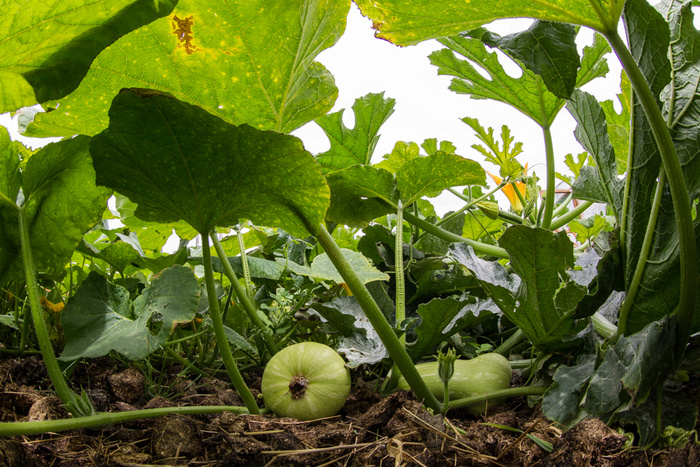
All of the potatoes have now been dug up, and the area dug over, manured and rotivated, the courgettes have been prolific, and the squashes are now maturing nicely as is the small square of sweet corn (duly protected from badgers!)
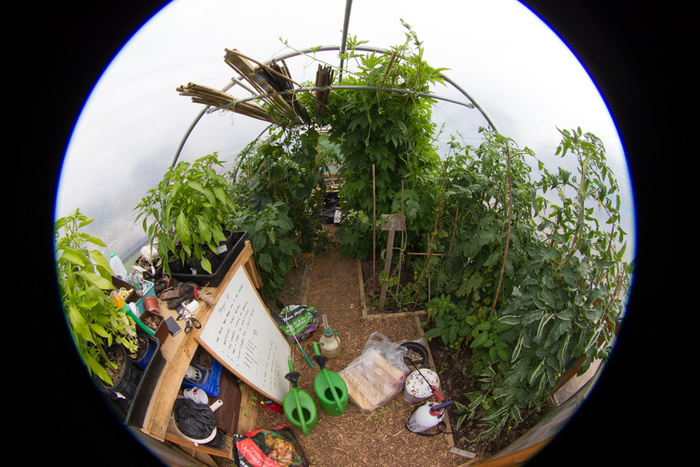
In the poly tunnel, peppers, aubergines, cantaloupe melons, tomatoes and chillies seem to be thriving, but the experiment with stuffing cucumbers doesn't seem to have delivered. Despite prolific growth, virtually taking over most of the tunnel, there is little evidence of anything that could even remotely be stuffed, and it may just be back to the drawing board with this particular item.
Bank Holiday weekend has seen plenty of activity on the plot, with the generous and valuable assistance of Brian and his team from the Community Payback Scheme. Earlier in the year S&C Scaffolding kindly donated over 480' scaffold boards, which have laid dormant waiting to be laid around the perimeter of the plot, and also to mark clearly the pathway through the centre.
Brian and his team kindly agreed to assist. A few blistering weeks of sun, and very little sign of rain, meant the task of digging 7 inch trenches all around and through the centre of the plot was going to prove pretty daunting. On Saturday, with everywhere else in the country receiving an absolute deluge, and Chelmsford missing out, all the boundaries were heavily watered with can after can to try and ensure that the area to be dug was at least manageable.
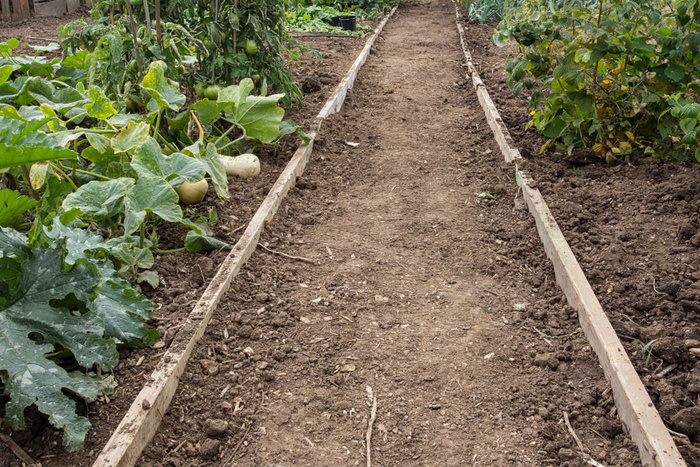
The team duly got stuck in on Sunday, and with further watering and loads of energy and effort, the ground was excavated, boundary boards placed and staked, tidying up the perimeter and defining the area of project 63. A huge vote of thanks to Brian and the team for all of their effort and input, which otherwise would have taken weeks and weeks to complete.
28th August 2016
In: Project 63
I am conscious that there has been a little bit of a broadcasting gap in relation to Project63, and hope that this small piece will bring everything up to speed.
The project is now producing 3-4 trugs of vegetables every week, supplemented with generous donations from other Association members lifts the amount which is delivered to our chosen charity. Derek has kindly strengthened the door latch on the poly tunnel,and our good friend Chris,(who has seemingly been avoiding us for some time for fear of the next allotment 'would you mind if') kindly fitted three fronts to the composting bins that he built earlier in the year.
All of the potatoes have now been dug up, and the area dug over, manured and rotivated, the courgettes have been prolific, and the squashes are now maturing nicely as is the small square of sweet corn (duly protected from badgers!)
In the poly tunnel, peppers, aubergines, cantaloupe melons, tomatoes and chillies seem to be thriving, but the experiment with stuffing cucumbers doesn't seem to have delivered. Despite prolific growth, virtually taking over most of the tunnel, there is little evidence of anything that could even remotely be stuffed, and it may just be back to the drawing board with this particular item.
Bank Holiday weekend has seen plenty of activity on the plot, with the generous and valuable assistance of Brian and his team from the Community Payback Scheme. Earlier in the year S&C Scaffolding kindly donated over 480' scaffold boards, which have laid dormant waiting to be laid around the perimeter of the plot, and also to mark clearly the pathway through the centre.
Brian and his team kindly agreed to assist. A few blistering weeks of sun, and very little sign of rain, meant the task of digging 7 inch trenches all around and through the centre of the plot was going to prove pretty daunting. On Saturday, with everywhere else in the country receiving an absolute deluge, and Chelmsford missing out, all the boundaries were heavily watered with can after can to try and ensure that the area to be dug was at least manageable.
The team duly got stuck in on Sunday, and with further watering and loads of energy and effort, the ground was excavated, boundary boards placed and staked, tidying up the perimeter and defining the area of project 63. A huge vote of thanks to Brian and the team for all of their effort and input, which otherwise would have taken weeks and weeks to complete.
Should have read the instructions!
30th July 2016
Any purchase of a product or activity that requires instructions to be carefully studied and followed should come with some form of warning. Pretty much a bloke thing (so I am often advised), instructions or guidance notes are very rarely followed, and are usually a bit of a drain on getting to grips with what we have purchased, or have set out to accomplish.
The same sort of warning should relate to the growing of plants. As early blogs have suggested, the writer started with a viewpoint of how difficult could it be, and now some of that rather laissez faire approach is providing a few important lessons.
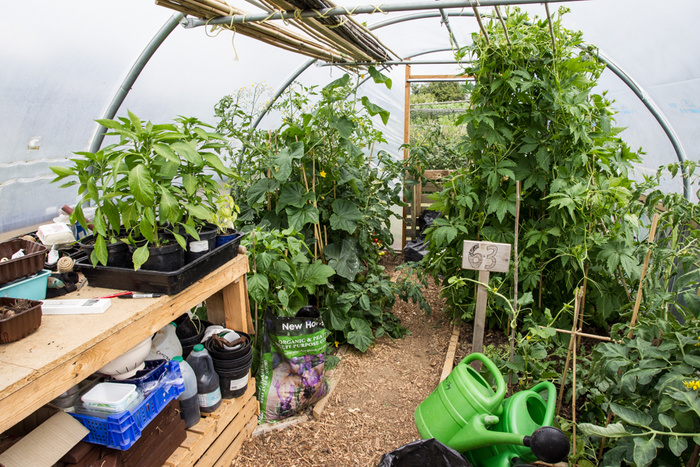
The biggest exists in the poly tunnel, where the drive to grow some different exotic vegetables at face value seems to have heralded some results, but also some unexpected issues. In particular the stuffing cucumber, whose leaves resemble another growth fondly recognised by smokers, is scrambling everywhere. A quick google search and a read of the notes on the seed packets suggest that these plants can grow to 3m x 4m in terms of spread! Oh dear - I've planted three of these in the space of 3 foot and the growth is now spreading rather quickly!!! I should have read the notes first - oh well, the results are at least eagerly anticipated.
Despite all this a steady stream of produce is now being harvested and sent to our chosen charity organisation, together with donations from other plot holders which have been gratefully received, thank you.
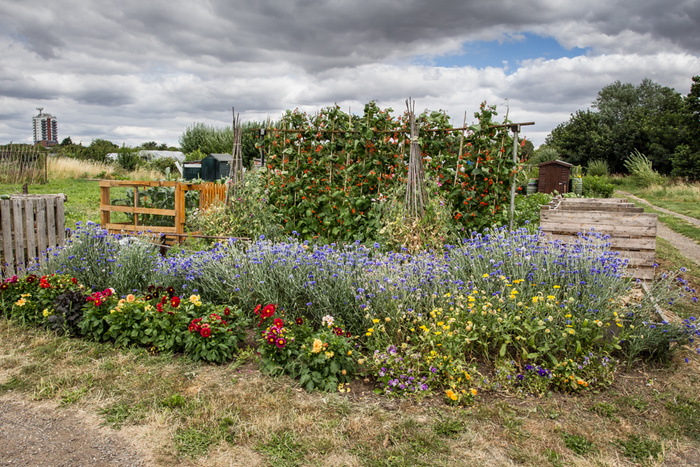
The plot itself has a spray of colour at the front from the planting of cornflowers, candelula, and dahlias, and some small lavender shoots has been planted close to the decking with the hope that this takes and grows well. Lavender and similar plants attract all sorts of bees and butterflies, which are good for the plot.
There isn't that much to offer up on the wildlife front, the only strange looking visitor a couple of weeks ago was this Clearwing. It is actually a moth, although when it first landed looked a little like a wasp. It tends to lay its eggs on current or berry bushes, and some further information can be found under.
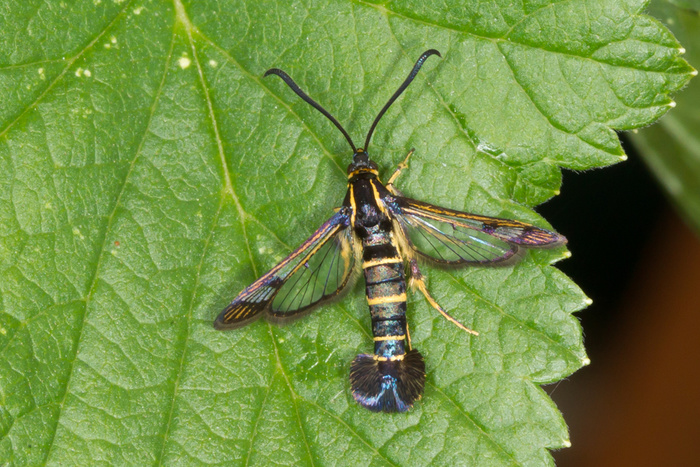
Scientific name: Synanthedon tipuliformis
June - July. Britain and Ireland. Small, transparent wings. Said to mimics wasps or hornets for protection from predators. Can be seen in gardens, allotments and fruit fields. Often found near currant bushes.
All Britain's resident clearwing moths fly by day. Several are superficially similar. This clearwing is small and black with a yellow collar and two yellow lines along the thorax which are absent on the similar Sallow Clearwing. Females have three and males have four thin yellow bands across the abdomen. The dark outer band on the forewing is streaked with orange on the Currant Clearwing which helps to distinguish it from the Thrift Clearwing.
Flies by day in sunny weather, often around larval foodplants and can also be found resting on leaves. Males are readily attracted to females, often in great numbers.
Size and Family
Family – Clearwing (Sesiids)
Small Sized
Conservation status
UK BAP: Not listed
Scarce (Nationally Scarce B)
Particular Caterpillar Food Plants
Cultivated and sometimes wild Black and Red Currant, less frequently on Gooseberry.
Information from butterfly conservation website.
..//.. Project 63
30th July 2016
In: Project 63
Any purchase of a product or activity that requires instructions to be carefully studied and followed should come with some form of warning. Pretty much a bloke thing (so I am often advised), instructions or guidance notes are very rarely followed, and are usually a bit of a drain on getting to grips with what we have purchased, or have set out to accomplish.
The same sort of warning should relate to the growing of plants. As early blogs have suggested, the writer started with a viewpoint of how difficult could it be, and now some of that rather laissez faire approach is providing a few important lessons.
The biggest exists in the poly tunnel, where the drive to grow some different exotic vegetables at face value seems to have heralded some results, but also some unexpected issues. In particular the stuffing cucumber, whose leaves resemble another growth fondly recognised by smokers, is scrambling everywhere. A quick google search and a read of the notes on the seed packets suggest that these plants can grow to 3m x 4m in terms of spread! Oh dear - I've planted three of these in the space of 3 foot and the growth is now spreading rather quickly!!! I should have read the notes first - oh well, the results are at least eagerly anticipated.
Despite all this a steady stream of produce is now being harvested and sent to our chosen charity organisation, together with donations from other plot holders which have been gratefully received, thank you.
The plot itself has a spray of colour at the front from the planting of cornflowers, candelula, and dahlias, and some small lavender shoots has been planted close to the decking with the hope that this takes and grows well. Lavender and similar plants attract all sorts of bees and butterflies, which are good for the plot.
There isn't that much to offer up on the wildlife front, the only strange looking visitor a couple of weeks ago was this Clearwing. It is actually a moth, although when it first landed looked a little like a wasp. It tends to lay its eggs on current or berry bushes, and some further information can be found under.
Scientific name: Synanthedon tipuliformis
June - July. Britain and Ireland. Small, transparent wings. Said to mimics wasps or hornets for protection from predators. Can be seen in gardens, allotments and fruit fields. Often found near currant bushes.
All Britain's resident clearwing moths fly by day. Several are superficially similar. This clearwing is small and black with a yellow collar and two yellow lines along the thorax which are absent on the similar Sallow Clearwing. Females have three and males have four thin yellow bands across the abdomen. The dark outer band on the forewing is streaked with orange on the Currant Clearwing which helps to distinguish it from the Thrift Clearwing.
Flies by day in sunny weather, often around larval foodplants and can also be found resting on leaves. Males are readily attracted to females, often in great numbers.
Size and Family
Family – Clearwing (Sesiids)
Small Sized
Conservation status
UK BAP: Not listed
Scarce (Nationally Scarce B)
Particular Caterpillar Food Plants
Cultivated and sometimes wild Black and Red Currant, less frequently on Gooseberry.
Information from butterfly conservation website.
..//.. Project 63
Project 63 Update
11th July 2016
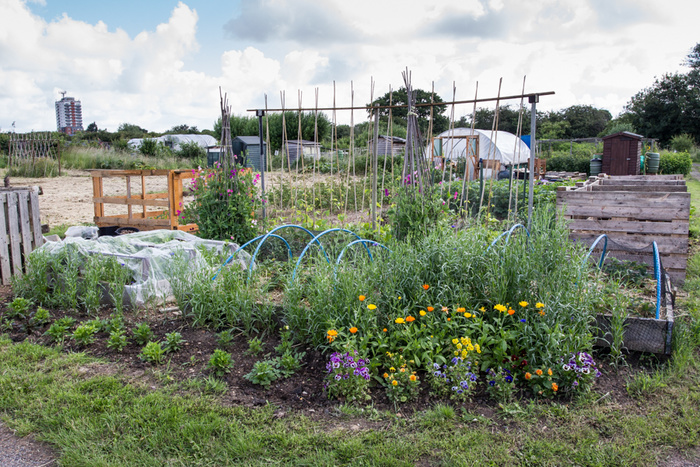
Welcome to the latest update from Project 63 and we are pleased to report the production of various foodstuffs now well underway, and donations to charity have been gratefully received.A selection of strawberries, raspberries, early potatoes, broad beans and two different variety of courgettes have all been donated. What remained of the magic carrots, - the non magic variety which were actually carrots and not a weed) - seem to have progressed reasonably well, and the patch next to the sweet corn area now dug over with french beans and leeks planted.
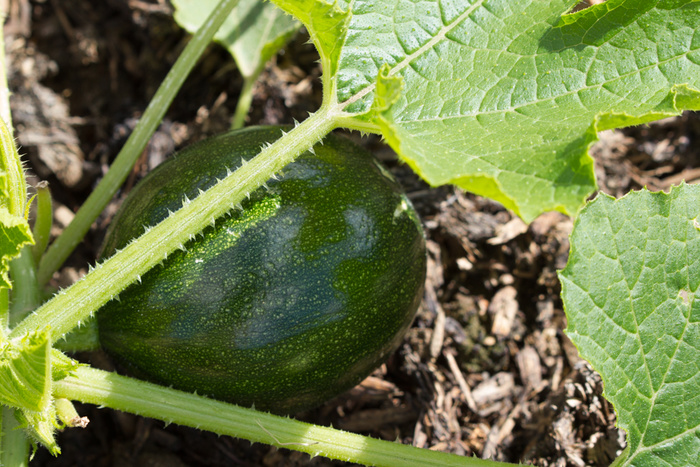
The poly tunnel is alive with green growth, with cucumbers, tomatoes, peppers, aubergines and a couple of more oriental vegetables seemingly thriving and the results of the latter eagerly anticipated. Finally the area by the shed and decking also fully dug over and weeded in preparation of create a wildlife area, and a big thanks to Derek who has kindly fixed the guttering on the shed, which would otherwise have remained a puzzle of epic proportions for yours truly to figure out.
11th July 2016
In: Project 63
Welcome to the latest update from Project 63 and we are pleased to report the production of various foodstuffs now well underway, and donations to charity have been gratefully received.A selection of strawberries, raspberries, early potatoes, broad beans and two different variety of courgettes have all been donated. What remained of the magic carrots, - the non magic variety which were actually carrots and not a weed) - seem to have progressed reasonably well, and the patch next to the sweet corn area now dug over with french beans and leeks planted.
The poly tunnel is alive with green growth, with cucumbers, tomatoes, peppers, aubergines and a couple of more oriental vegetables seemingly thriving and the results of the latter eagerly anticipated. Finally the area by the shed and decking also fully dug over and weeded in preparation of create a wildlife area, and a big thanks to Derek who has kindly fixed the guttering on the shed, which would otherwise have remained a puzzle of epic proportions for yours truly to figure out.
The Novice growers disappointment.
12th June 2016
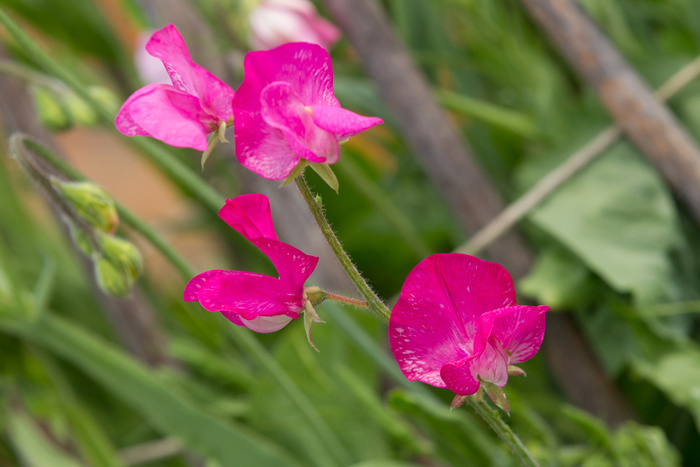
Project 63 now has some colour, plenty of growth, and this all coincides with lots of colour around the rest of the allotment site.
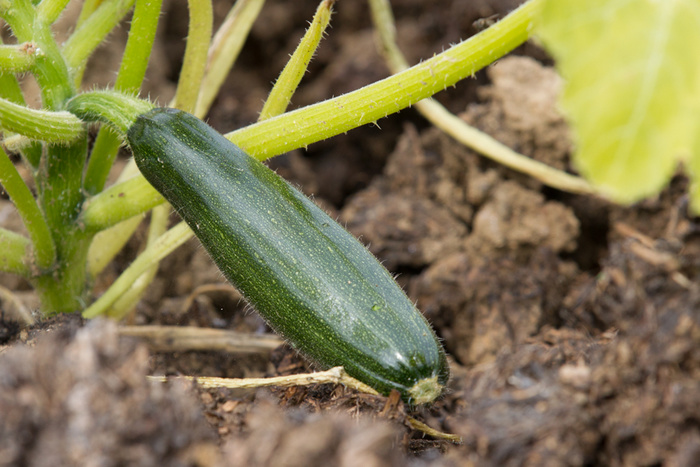
For the novice grower there is a lot to be excited about: the potatoes seem to be doing well, and have flowers; the sweet peas are starting to flower, all of which adds colour to the plot, and amazingly we have our first courgette.
However, amongst all this good news is some disappointment. An earlier blog highlighted the fact that we had some magic carrots that had seemingly absconded and determined to grow outside of where they were sown. Alas this rather romantic notion was dashed this weekend when the plants that were supposed to be the projects answer to Jack and the Beanstalk produced some flowers, which could be immediately identified as Fumitory, and viewed as a weed to most.
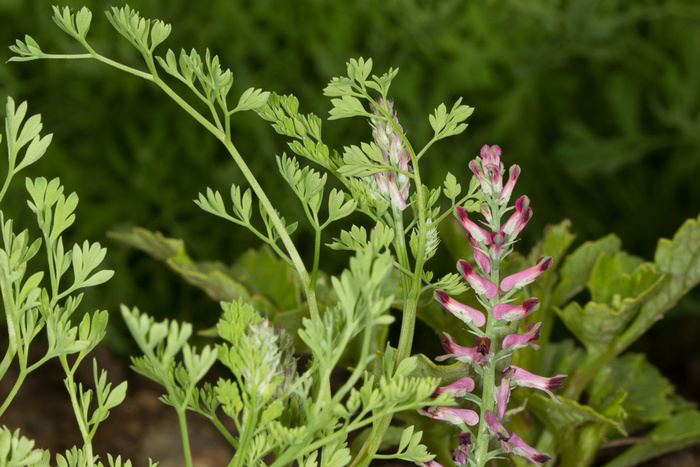
- not magic carrots, after all, but a plant called Fumitory -
Common fumitory has been used medicinally, as can be seen from its old Finnish name and its scientific species name officinalis. A century and a half ago folk medicine was highly nuanced, and common fumitory was used to treat stomach and gall problems, haemorrhoids, migraines, bad blood, and a host of other conditions. Folk healers had to be very careful with common fumitory: its stems are poisonous and the fumarin that they contain can affect patients very differently in different dosages.
Nowadays common fumitory is generally regarded as a weed, although its red flowers make it an attractive annual in fields and gardens. The species’ seeds germinate early in the spring and the plant might begin to flower already in June. It can stand frost long into the autumn. Despite being common, the plant hides itself so well among other vegetation that it isn’t easy to find. It often goes unnoticed by insects too and has to self-pollinate in order to produce seeds.
Information from a web site called Nature Gate.
None the less, it had to go, and now in the place of magic carrots, have planted some dahlias.
From a photographer's perspective the success of the plot naturally encourages lots of insects, some of whom we would consider to be friendly, particularly those that feast on all those beasties that allotment holders wage a constant battle against (green fly, black fly and other), and the flowering plants, including comfrey encourage the bees and pollinators. Check in for future posts for further wildlife updates.
So Fumitory can be formerly added to our rogues gallery, or our collection of 'know your enemy'.
12th June 2016
In: Project 63
Project 63 now has some colour, plenty of growth, and this all coincides with lots of colour around the rest of the allotment site.
For the novice grower there is a lot to be excited about: the potatoes seem to be doing well, and have flowers; the sweet peas are starting to flower, all of which adds colour to the plot, and amazingly we have our first courgette.
However, amongst all this good news is some disappointment. An earlier blog highlighted the fact that we had some magic carrots that had seemingly absconded and determined to grow outside of where they were sown. Alas this rather romantic notion was dashed this weekend when the plants that were supposed to be the projects answer to Jack and the Beanstalk produced some flowers, which could be immediately identified as Fumitory, and viewed as a weed to most.
- not magic carrots, after all, but a plant called Fumitory -
Common fumitory has been used medicinally, as can be seen from its old Finnish name and its scientific species name officinalis. A century and a half ago folk medicine was highly nuanced, and common fumitory was used to treat stomach and gall problems, haemorrhoids, migraines, bad blood, and a host of other conditions. Folk healers had to be very careful with common fumitory: its stems are poisonous and the fumarin that they contain can affect patients very differently in different dosages.
Nowadays common fumitory is generally regarded as a weed, although its red flowers make it an attractive annual in fields and gardens. The species’ seeds germinate early in the spring and the plant might begin to flower already in June. It can stand frost long into the autumn. Despite being common, the plant hides itself so well among other vegetation that it isn’t easy to find. It often goes unnoticed by insects too and has to self-pollinate in order to produce seeds.
Information from a web site called Nature Gate.
None the less, it had to go, and now in the place of magic carrots, have planted some dahlias.
From a photographer's perspective the success of the plot naturally encourages lots of insects, some of whom we would consider to be friendly, particularly those that feast on all those beasties that allotment holders wage a constant battle against (green fly, black fly and other), and the flowering plants, including comfrey encourage the bees and pollinators. Check in for future posts for further wildlife updates.
So Fumitory can be formerly added to our rogues gallery, or our collection of 'know your enemy'.
Know your enemies?
09th June 2016
Know your enemies is a phrase banded about in many aspects of life. However, this phrase could not be seemingly more important to the Allotment plot holder whose constant battle against invaders focused on a free meal from all their hard effort is continuous.
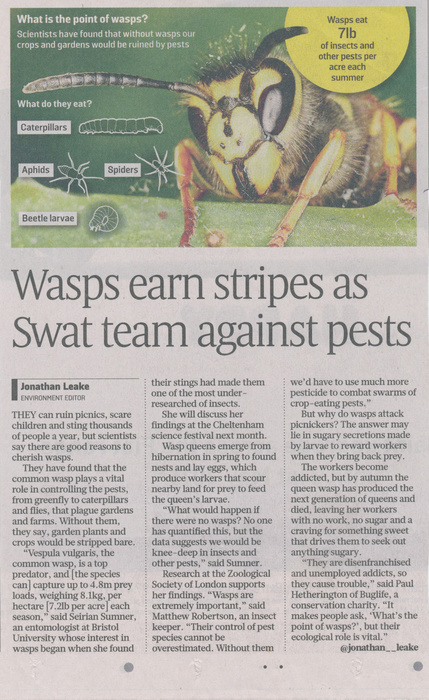
However, some of those foes that we may consider to be enemies, should be in fact considered friends. Take the wasp. For most a pest, and frequently questioned as to 'what is their purpose?'. A recent study and article in the Daily Telegraph championed the cause of the wasp suggesting that without their voracious appetite for aphids, bugs and beasties we could potentially be over run with these damaging invaders. A link to the article can be follows
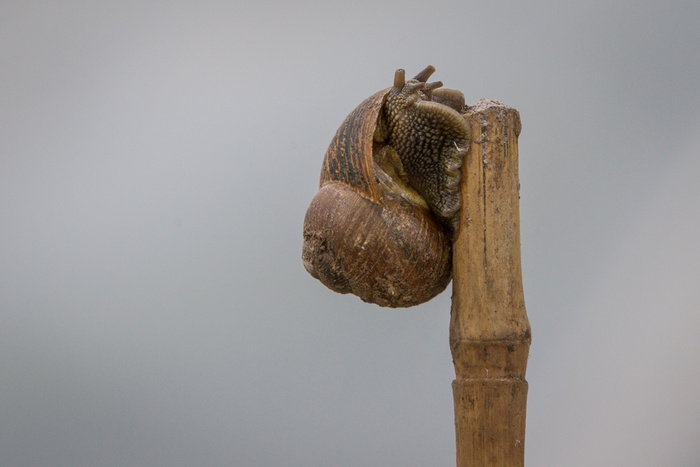
Snails on the other hand should definitely be considered an enemy. With their messy trails and taste for greens, garden snails are often considered to be pests whose strong homing instinct makes human control difficult. They are often seen after rain, and leave a tell-tale trail of mucus. When conditions are dry, snails retreat into their shell and seal the entrance. They can then survive in a state of suspended animation for several months. Did you know? A single garden snail can have 430 babies in a year.
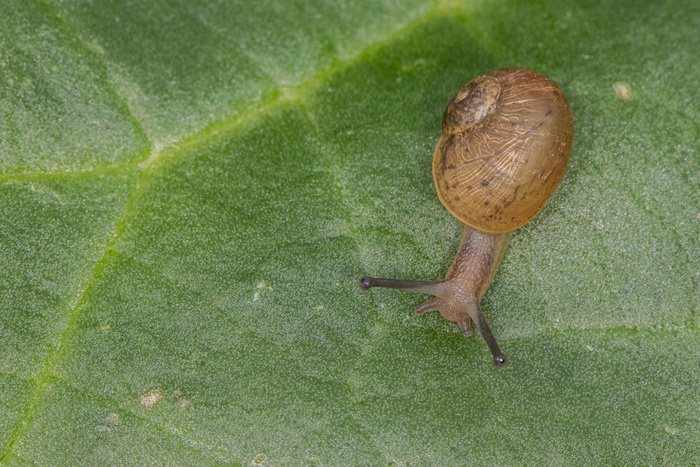
Despite all the writers best efforts to ensure plants protected, this particular snail seemed to have an interest in extreme methods in the search for a feast, climbing this six foot cane, and struggling a little at the top to turn round. Regrettably for the snail, I found it before it found my aubergine plants, and after posing for the camera, he was duly removed. It never occurred to me that snails have strong homing instincts, (as per articles on the web) and hope that where i deposited the fiend is suitably distant enough for no further concern.
09th June 2016
In: Project 63
Know your enemies is a phrase banded about in many aspects of life. However, this phrase could not be seemingly more important to the Allotment plot holder whose constant battle against invaders focused on a free meal from all their hard effort is continuous.
However, some of those foes that we may consider to be enemies, should be in fact considered friends. Take the wasp. For most a pest, and frequently questioned as to 'what is their purpose?'. A recent study and article in the Daily Telegraph championed the cause of the wasp suggesting that without their voracious appetite for aphids, bugs and beasties we could potentially be over run with these damaging invaders. A link to the article can be follows
Snails on the other hand should definitely be considered an enemy. With their messy trails and taste for greens, garden snails are often considered to be pests whose strong homing instinct makes human control difficult. They are often seen after rain, and leave a tell-tale trail of mucus. When conditions are dry, snails retreat into their shell and seal the entrance. They can then survive in a state of suspended animation for several months. Did you know? A single garden snail can have 430 babies in a year.
Despite all the writers best efforts to ensure plants protected, this particular snail seemed to have an interest in extreme methods in the search for a feast, climbing this six foot cane, and struggling a little at the top to turn round. Regrettably for the snail, I found it before it found my aubergine plants, and after posing for the camera, he was duly removed. It never occurred to me that snails have strong homing instincts, (as per articles on the web) and hope that where i deposited the fiend is suitably distant enough for no further concern.
It isn't just about managing what you grow!
31st May 2016
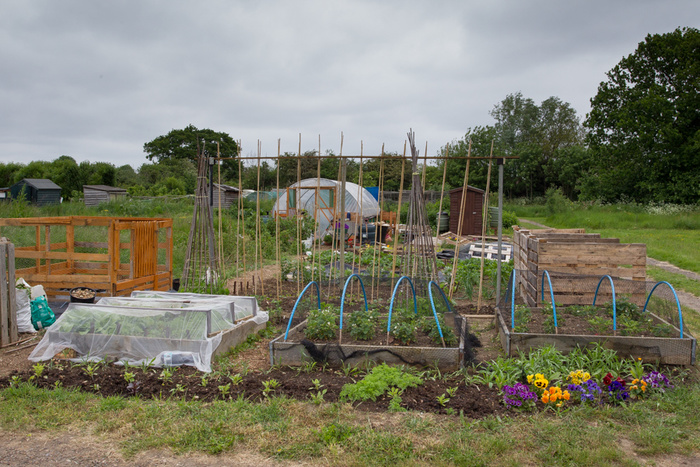
It is rapidly dawning on yours truly that the art of the allotment is not just about managing what you determine to grow, but managing all those things that you don't want to grow, or encourage. Having recovered from the shock that a week on vacation heralds an invasion of weeds, the slightest moisture whether rain or a serious watering has a similar effect. With Karen and yours truly spending the last couple of saturdays dealing with the intruders, a certain degree of paranoia seems to creep in. I am sure by the time a visit to the cabin to consume the day before's left over chinese and return, that several of the intrepid beasties had protruded.......
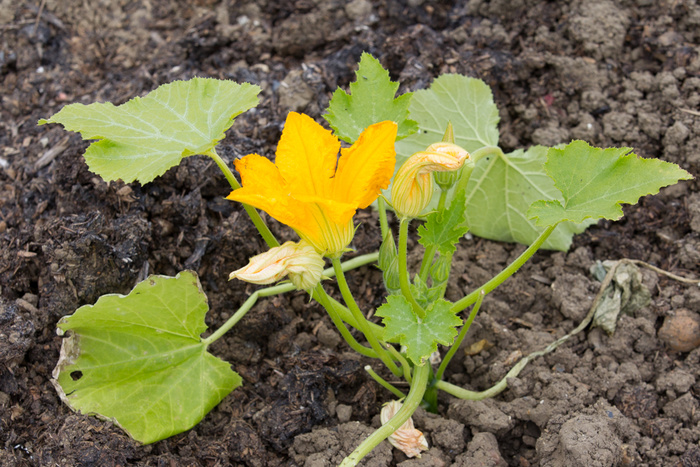
None the less, project 63 seems to be taking shape. Protection for the strawberries has been provided, and despite the best attempts of the local badger population, the carrots (although a little sparse) and the celtuce seem unaffected. Once the weed infestation was cleared, the beetroot, parsnips seem to be sprouting, although the Kohl Rabi and turnip seem to be absent. The runner beans, several different types all seem to be protruding, and the area by the manure heap now hosts two different type of courgette, Tondo di Piacenza and Zucchini, plus Butternut squash.
Monday's weather was a little off, and the writer bagged the plumb job of working the poly tunnel, whilst commandeering the radio and tuning in to test match special. The area to the left as you walk in now has tomato, peppers and a couple of aubergines, whilst on the other side the soil has been turned over, a healthy dose of manure and some peat added, in preparation for the planting of our jungle seeds.
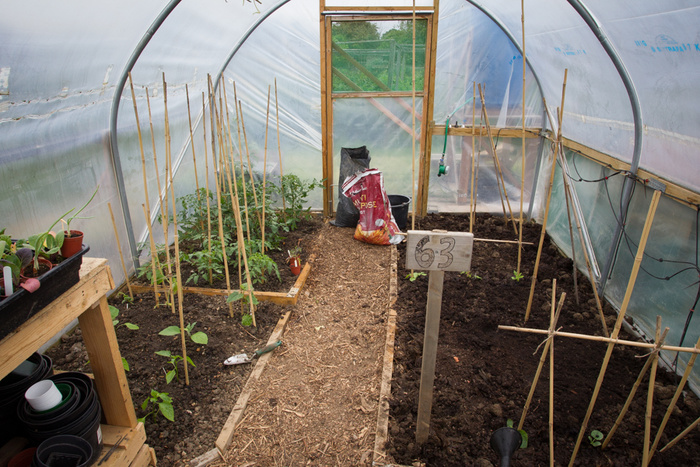
Peter Hunnable has kindly nurtured several Cucamelons, and the airing cupboard at home has been relieved of stuffing cucumber (Cyclanthera Pedata) plants. There is some space remaining for some melons thus ensuring that our ambition to experiment sets off.
Finally, going back to the original theme, the black fabric by the shed was cut and lifted to enable the sunflowers and some colour in the form of dahlia's to be planted only to herald a veritable army of slugs.
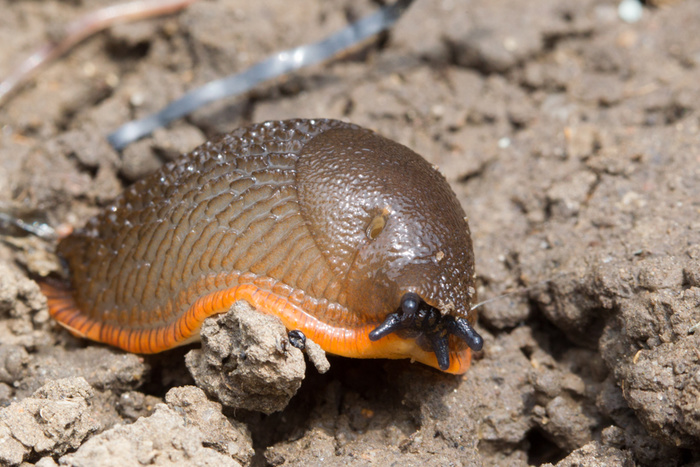
I read somewhere, 'know your enemies', and with this in mind watch future posts for some further information on the 'Allotment keepers friends and foes'.
31st May 2016
In: Project 63
It is rapidly dawning on yours truly that the art of the allotment is not just about managing what you determine to grow, but managing all those things that you don't want to grow, or encourage. Having recovered from the shock that a week on vacation heralds an invasion of weeds, the slightest moisture whether rain or a serious watering has a similar effect. With Karen and yours truly spending the last couple of saturdays dealing with the intruders, a certain degree of paranoia seems to creep in. I am sure by the time a visit to the cabin to consume the day before's left over chinese and return, that several of the intrepid beasties had protruded.......
None the less, project 63 seems to be taking shape. Protection for the strawberries has been provided, and despite the best attempts of the local badger population, the carrots (although a little sparse) and the celtuce seem unaffected. Once the weed infestation was cleared, the beetroot, parsnips seem to be sprouting, although the Kohl Rabi and turnip seem to be absent. The runner beans, several different types all seem to be protruding, and the area by the manure heap now hosts two different type of courgette, Tondo di Piacenza and Zucchini, plus Butternut squash.
Monday's weather was a little off, and the writer bagged the plumb job of working the poly tunnel, whilst commandeering the radio and tuning in to test match special. The area to the left as you walk in now has tomato, peppers and a couple of aubergines, whilst on the other side the soil has been turned over, a healthy dose of manure and some peat added, in preparation for the planting of our jungle seeds.
Peter Hunnable has kindly nurtured several Cucamelons, and the airing cupboard at home has been relieved of stuffing cucumber (Cyclanthera Pedata) plants. There is some space remaining for some melons thus ensuring that our ambition to experiment sets off.
Finally, going back to the original theme, the black fabric by the shed was cut and lifted to enable the sunflowers and some colour in the form of dahlia's to be planted only to herald a veritable army of slugs.
I read somewhere, 'know your enemies', and with this in mind watch future posts for some further information on the 'Allotment keepers friends and foes'.
Post Holiday Greens (Blues)
17th May 2016
Met with a swathe of green when returning from a couple of weeks well earned R&R, was a little blue to find that the allotment keepers consistent invader (weeds) accounted for the majority of the covering, and the carefully turned over plot needed some pretty urgent thinning, - actually removing - of all the offending growth. Such was the prolific spread, it took a little time to realise that amongst this there were some carrots that protruded, and most pleasing the Celtuce that had been sown had seriously come good. (more about Celtuce to follow)
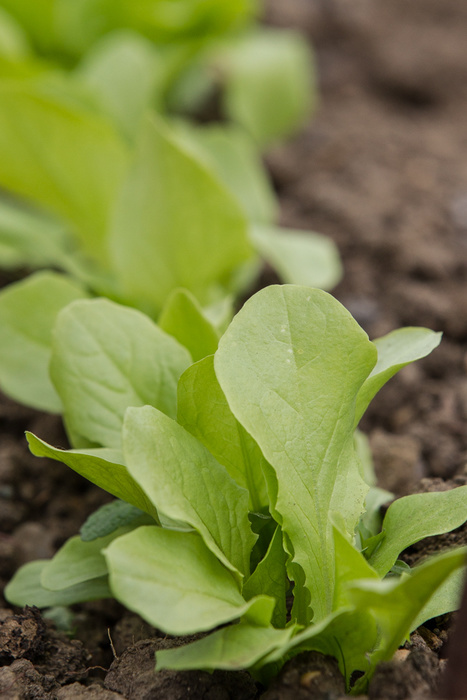
The plot is at least beginning to take shape, and thanks to the efforts of Peter Hunnable we now have a rather robust frame for the runner beans, together with a manure filled trench, and the beans were sown this weekend and heavily watered. A clutch of chrysanthemums were also planted in between the two tepee's of sweet peas, which I have to suggest look a little bedraggled. Darryl's elegant digging of the old area of brassicas has been completed for which a big thank you.
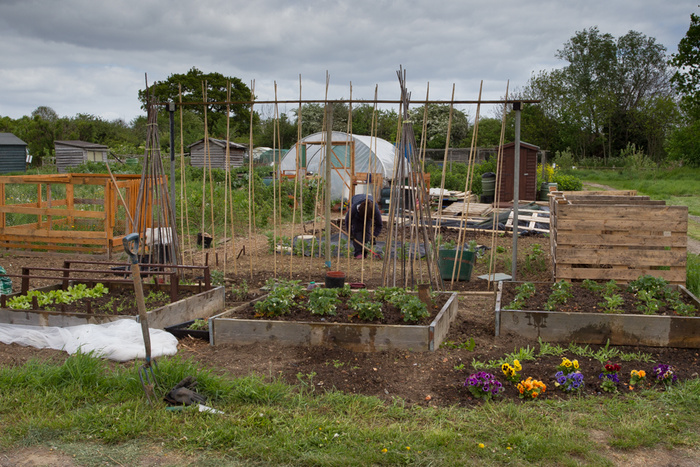
Previously rows of Turnip, Beetroot, Kohl Rabi and Parsnips were planted to compliment the rows of potatoes, together with onions and broad beans, which now means the main area of the plot which was the subject of various posts related to digging now have crops in situ.
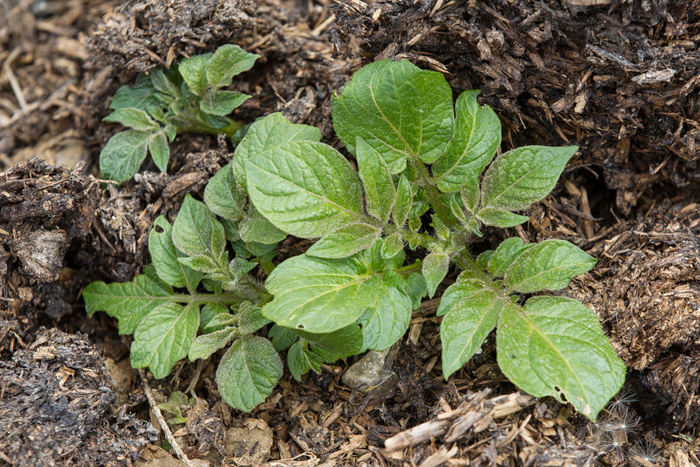
The Strawberries, which looked a little thin seem to have blossomed, have flowers and fruit developing, and I was suitably proud to identify that various potatoes have now sprung into life (only to be advised that this was no big deal and these were easy to grow, in fact they'll grow without much input).
The poly tunnel has a few tomato plants, and the sowing of the Oriental or jungle seeds deliberately left until after we returned home and the airing cupboard has duly been evacuated to accommodate.
Finally it seems that we may have some 'magic' carrots, as it appears that we have some sprouters some distance from where we originally deposited the seed, and some appear to have hopped the confines of the raised beds.
Just a reminder that this project is being run by the Allotment Association, with the produce grown being donated to charity. If you feel that you have some capacity to assist or help out, or would be interested in participating, please do not hesitate to contact Karen or Ray,
project 63.
17th May 2016
In: Project 63
Met with a swathe of green when returning from a couple of weeks well earned R&R, was a little blue to find that the allotment keepers consistent invader (weeds) accounted for the majority of the covering, and the carefully turned over plot needed some pretty urgent thinning, - actually removing - of all the offending growth. Such was the prolific spread, it took a little time to realise that amongst this there were some carrots that protruded, and most pleasing the Celtuce that had been sown had seriously come good. (more about Celtuce to follow)
The plot is at least beginning to take shape, and thanks to the efforts of Peter Hunnable we now have a rather robust frame for the runner beans, together with a manure filled trench, and the beans were sown this weekend and heavily watered. A clutch of chrysanthemums were also planted in between the two tepee's of sweet peas, which I have to suggest look a little bedraggled. Darryl's elegant digging of the old area of brassicas has been completed for which a big thank you.
Previously rows of Turnip, Beetroot, Kohl Rabi and Parsnips were planted to compliment the rows of potatoes, together with onions and broad beans, which now means the main area of the plot which was the subject of various posts related to digging now have crops in situ.
The Strawberries, which looked a little thin seem to have blossomed, have flowers and fruit developing, and I was suitably proud to identify that various potatoes have now sprung into life (only to be advised that this was no big deal and these were easy to grow, in fact they'll grow without much input).
The poly tunnel has a few tomato plants, and the sowing of the Oriental or jungle seeds deliberately left until after we returned home and the airing cupboard has duly been evacuated to accommodate.
Finally it seems that we may have some 'magic' carrots, as it appears that we have some sprouters some distance from where we originally deposited the seed, and some appear to have hopped the confines of the raised beds.
Just a reminder that this project is being run by the Allotment Association, with the produce grown being donated to charity. If you feel that you have some capacity to assist or help out, or would be interested in participating, please do not hesitate to contact Karen or Ray,
project 63.
Week 4 Update - Project 63
18th April 2016
The Allotment is beginning to take shape after 4 weeks of reasonably intensive attention. During the course of the week Dave Rowling rotivated the mid area of the plot, turning and breaking the soil up so that we are ready to plant in this area. Two tepee style structures previously erected at the end of the plot have had sweet peas planted the base.
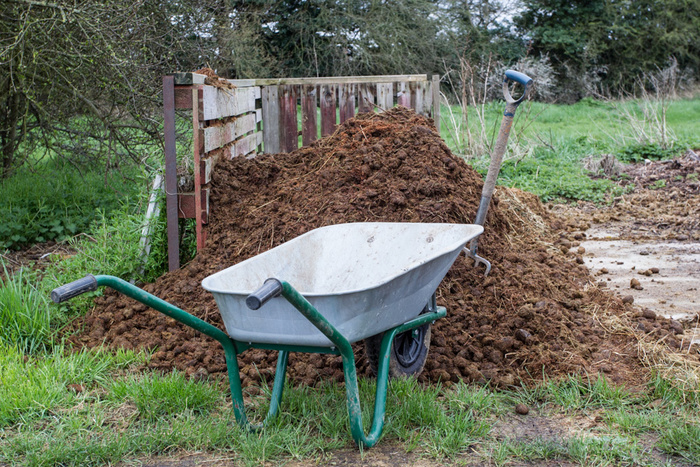
An early morning delivery of manure was taken advantage of, and the compost bins that Chris built, christened with it's first deposits.
Our good friend and neighbour, who seems to be central to all build on the plot was otherwise engaged this weekend assisting another friend, this time with a fence calamity. Not even the offer of Tea, Biscuits and cake could persuade him that his newest friend's fence could wait!
The weather on Saturday was not at it's warmest, and with some rain, focus switched from outside to inside. The area by the Ferrari of a potting bench was dug over, with compost added and raked in, with the opposite side dug over, some weeds removed. This area now requires a little water, raking to remove some of the 'lumpier' areas, and compost added and raked through.
Karen completed the dig behind the compost bins, and yours truly got started at the top of the plot by the poly tunnel, originally to clear the surface weeds, but then got a second wind, and dug the majority of the front over by the time our energy had run short, just a small pocket of weedy ground evading the weekend fork.
Peter Hunnable erected two rather solid looking poles to house the framework for the runner beans, and then proceeded to dig a trench to fill with manure to ensure the soil is suitably deep and fertile to promote healthy growth.
The To Do list seems to be growing, seemingly due to the fact that over the last three to four weeks most of the to doing has been digging. A noticeboard in the poly tunnel displays some ideas for assistance for those of you who would like to chip in ( I was going to suggest dig in, but am all dug out at this point).
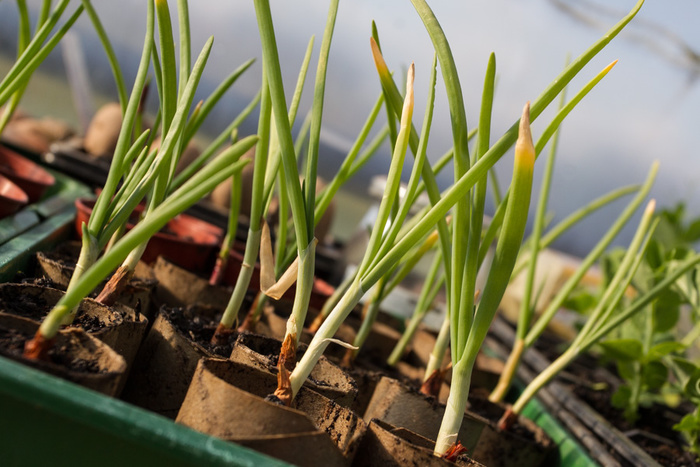
There are also some plants in the poly tunnel that now we have dug most of the area require planting, from onions, broad beans, and further potatoes, with the idea being to leave a diagram of planting areas on site.
18th April 2016
In: Project 63
The Allotment is beginning to take shape after 4 weeks of reasonably intensive attention. During the course of the week Dave Rowling rotivated the mid area of the plot, turning and breaking the soil up so that we are ready to plant in this area. Two tepee style structures previously erected at the end of the plot have had sweet peas planted the base.
An early morning delivery of manure was taken advantage of, and the compost bins that Chris built, christened with it's first deposits.
Our good friend and neighbour, who seems to be central to all build on the plot was otherwise engaged this weekend assisting another friend, this time with a fence calamity. Not even the offer of Tea, Biscuits and cake could persuade him that his newest friend's fence could wait!
The weather on Saturday was not at it's warmest, and with some rain, focus switched from outside to inside. The area by the Ferrari of a potting bench was dug over, with compost added and raked in, with the opposite side dug over, some weeds removed. This area now requires a little water, raking to remove some of the 'lumpier' areas, and compost added and raked through.
Karen completed the dig behind the compost bins, and yours truly got started at the top of the plot by the poly tunnel, originally to clear the surface weeds, but then got a second wind, and dug the majority of the front over by the time our energy had run short, just a small pocket of weedy ground evading the weekend fork.
Peter Hunnable erected two rather solid looking poles to house the framework for the runner beans, and then proceeded to dig a trench to fill with manure to ensure the soil is suitably deep and fertile to promote healthy growth.
The To Do list seems to be growing, seemingly due to the fact that over the last three to four weeks most of the to doing has been digging. A noticeboard in the poly tunnel displays some ideas for assistance for those of you who would like to chip in ( I was going to suggest dig in, but am all dug out at this point).
There are also some plants in the poly tunnel that now we have dug most of the area require planting, from onions, broad beans, and further potatoes, with the idea being to leave a diagram of planting areas on site.
A Non Dig Day
11th April 2016
When first contemplating the potential of plot 63, the area of land under consideration didn't appear that big, and a quick scout and then the drawing of a plan in terms of the proposed project, was organised on the basis of 'how difficult can that be?', we'll have this ship shape in no time.
After two weeks of constant digging, considerable assistance, and still we haven't dug the whole site, am beginning to realise that the plot was far bigger than the initial wander considered. It's a slightly different thing doing rather than the initial imagining, and the task somewhat bigger than perhaps I had given credibility to, If it were not for Peter, Darryl, Karen and various other offers of assistance, not to mention our neighbour Chris (who must imagine what on earth did i let myself into) goodness knows how little would actually have been achieved.
Today however, was to be a non dig day, on the basis that we ought to plant something on the allotment and their were various other items to complete on the'To Do' List.
Our good neighbour - who is now looking to move - completed the potting bench to die for by adding a work surface, and then turned his attention to screwing down and securing the decking in front of the shed.
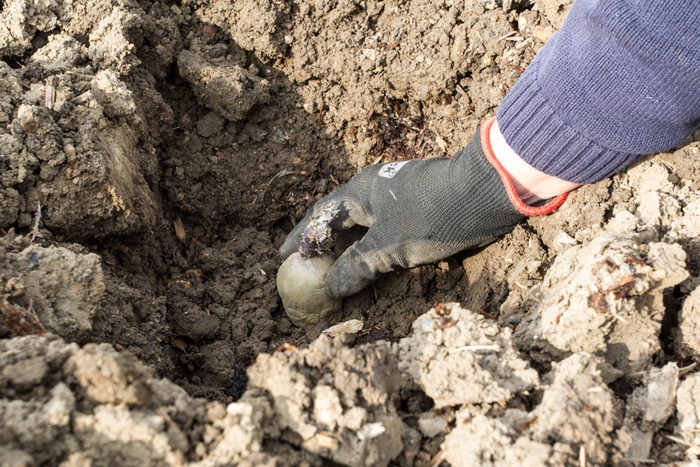
Whilst all this enterprise was taking place, several rows of potatoes were sown, including Second Earlies (Charlotte), Psycho Myra as I call them (Sarpo Mira), and some Desire. Much to my chagrin this required digging, which rather operated against the notion of a non dig day, but several considerable holes later, filled with manure, compost and the seed potatoes themselves, lunch was taken.
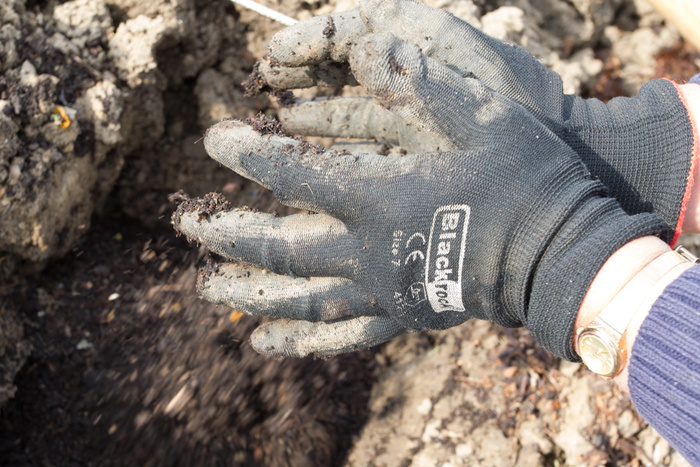
The Shed was offered a thorough coat of protective stain, as was the decking, before attention turned to the raised beds. Two already have strawberries, and the third has now been sown with 2 different carrot varieties, Sugersnax and Chanteney, plus two rows of Celtuce, an oriental vegetable that suggests both the leaves and the roots can be harvested.
With the weather closing in, a small area at the front of the plot behind the rather spartan display of pansies was sown with cornflower which is hoped will add some colour and interest to the front end of the site.
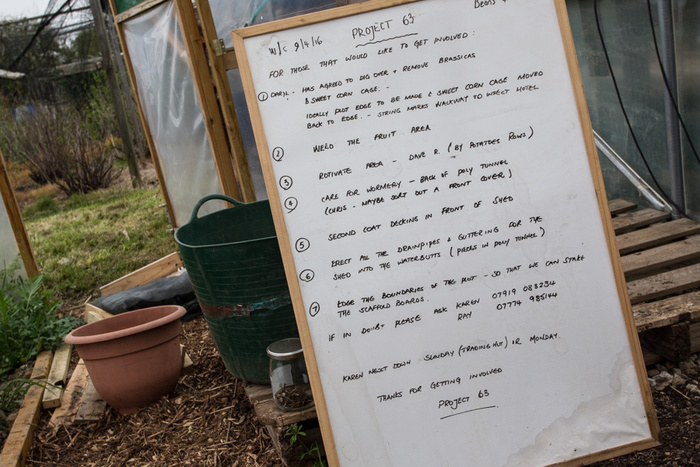
Whilst a fair number of jobs continue to be completed, the To Do list seemingly grows as more things are found either as a consequence of another job that has been completed or just the natural progress that is being made. A board with various To Do items is on display in the poly tunnel, and once again anyone that wishes to get involved and 'dig in' so to speak is more than welcome. Please contact Karen or Ray.
11th April 2016
In: Project 63
When first contemplating the potential of plot 63, the area of land under consideration didn't appear that big, and a quick scout and then the drawing of a plan in terms of the proposed project, was organised on the basis of 'how difficult can that be?', we'll have this ship shape in no time.
After two weeks of constant digging, considerable assistance, and still we haven't dug the whole site, am beginning to realise that the plot was far bigger than the initial wander considered. It's a slightly different thing doing rather than the initial imagining, and the task somewhat bigger than perhaps I had given credibility to, If it were not for Peter, Darryl, Karen and various other offers of assistance, not to mention our neighbour Chris (who must imagine what on earth did i let myself into) goodness knows how little would actually have been achieved.
Today however, was to be a non dig day, on the basis that we ought to plant something on the allotment and their were various other items to complete on the'To Do' List.
Our good neighbour - who is now looking to move - completed the potting bench to die for by adding a work surface, and then turned his attention to screwing down and securing the decking in front of the shed.
Whilst all this enterprise was taking place, several rows of potatoes were sown, including Second Earlies (Charlotte), Psycho Myra as I call them (Sarpo Mira), and some Desire. Much to my chagrin this required digging, which rather operated against the notion of a non dig day, but several considerable holes later, filled with manure, compost and the seed potatoes themselves, lunch was taken.
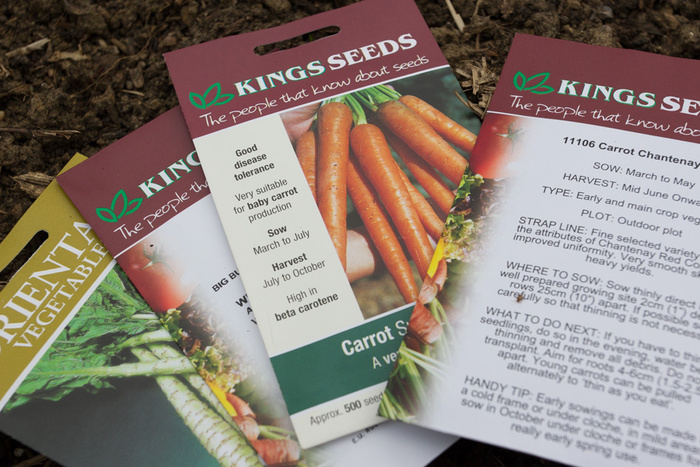
The Shed was offered a thorough coat of protective stain, as was the decking, before attention turned to the raised beds. Two already have strawberries, and the third has now been sown with 2 different carrot varieties, Sugersnax and Chanteney, plus two rows of Celtuce, an oriental vegetable that suggests both the leaves and the roots can be harvested.
With the weather closing in, a small area at the front of the plot behind the rather spartan display of pansies was sown with cornflower which is hoped will add some colour and interest to the front end of the site.
Whilst a fair number of jobs continue to be completed, the To Do list seemingly grows as more things are found either as a consequence of another job that has been completed or just the natural progress that is being made. A board with various To Do items is on display in the poly tunnel, and once again anyone that wishes to get involved and 'dig in' so to speak is more than welcome. Please contact Karen or Ray.
Good bugs or Bad bugs?
10th April 2016
In one of the earlier blogs, we highlighted that the big dig had not progressed as quickly as anticipated due to the interest in various bugs and beasties that had been uncovered.
Several bugs were found during the course of the afternoon that provoked quite a debate as to whether they were good bugs or bad bugs. One such example can be seen in the image under, to which no one seemed entirely certain.
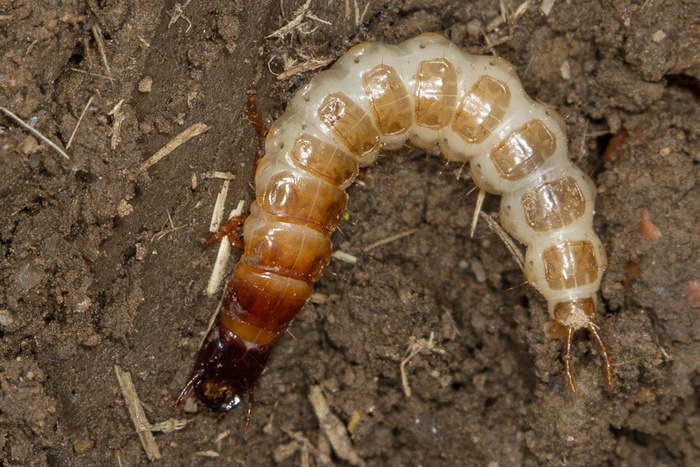
After a search on various entomology web sites, it would appear (unless anyone would like to point us in the right direction) that this particular bug is one to be saved as it eventually becomes a ground beetle, whose favourite snack is one of the allotment plot holders principal foes, the slug.
We would however be interested if anyone can identify the following bug that our search in numerous places has failed to find exactly what it is. If you do know what it is would appreciate some advice especially whether it falls into the category of good bugs, or those that may have an adverse affect on the welfare of the produce being cultivated.
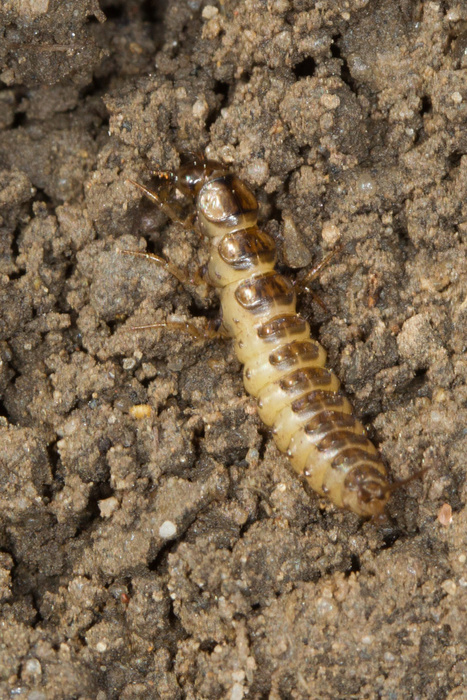
good bug or bad bug? any guidance welcome
10th April 2016
In: Project 63
In one of the earlier blogs, we highlighted that the big dig had not progressed as quickly as anticipated due to the interest in various bugs and beasties that had been uncovered.
Several bugs were found during the course of the afternoon that provoked quite a debate as to whether they were good bugs or bad bugs. One such example can be seen in the image under, to which no one seemed entirely certain.
After a search on various entomology web sites, it would appear (unless anyone would like to point us in the right direction) that this particular bug is one to be saved as it eventually becomes a ground beetle, whose favourite snack is one of the allotment plot holders principal foes, the slug.
We would however be interested if anyone can identify the following bug that our search in numerous places has failed to find exactly what it is. If you do know what it is would appreciate some advice especially whether it falls into the category of good bugs, or those that may have an adverse affect on the welfare of the produce being cultivated.
good bug or bad bug? any guidance welcome
Allotment Build - Project 63
09th April 2016
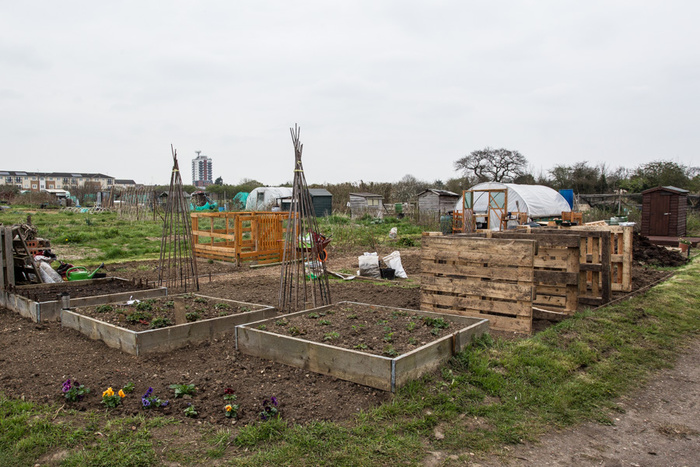
Saturday morning heralded not the best weather, and whilst it couldn't be described as truly inclement, it appeared to be trying it's best. Having convinced our friendly neighbour Chris that there were further opportunities to put his building skills to the test (we're not sure how long he is going to remain a friendly neighbour) the task in hand for the morning was to build the compost bins for the front of the site. The area of land where these were to be placed still had an incline so some levelling inevitable to get them 'spirit level' level. A deposit of pallets kindly supplied by Writtle Road Nursery had been left to create the latest building masterpiece.
It's amazing the level of discussion that is required, for what is quite a small project. Do we want the pallets this way or that way....no you can't use that one as the slats are not the same size as the other....make sure they're all round the same way, surely that's upside down, it needs to look good etc, and so it continued. Karen, Ray, Chris and with Derek chipping in as an interested observer, debated the aesthetics of some donated pallets and eventually some 15 minutes later, the build began.
After the initial debate, tea and chelsea buns, Chris produced the goods in time to disappear at lunch time for the footie - just the small issue of a door for the fronts to consider.
In addition to the build, a delivery of scaffold planks kindly donated by SC Cousins Scaffolding arrived around 10 ish. The general idea for these to line the outer perimeter of the plot, and any additional to mark out the pathways through the plot. We would like to offer our grateful thanks to SC Cousins for their generosity.
During the course of the week Karen had mowed the edges, tidied the rear of the plot behind the poly tunnel and found a wormery tucked away and erected some pyramids for the Sweet peas. So again plenty of assistance during the week for the project.
09th April 2016
In: Project 63
Saturday morning heralded not the best weather, and whilst it couldn't be described as truly inclement, it appeared to be trying it's best. Having convinced our friendly neighbour Chris that there were further opportunities to put his building skills to the test (we're not sure how long he is going to remain a friendly neighbour) the task in hand for the morning was to build the compost bins for the front of the site. The area of land where these were to be placed still had an incline so some levelling inevitable to get them 'spirit level' level. A deposit of pallets kindly supplied by Writtle Road Nursery had been left to create the latest building masterpiece.
It's amazing the level of discussion that is required, for what is quite a small project. Do we want the pallets this way or that way....no you can't use that one as the slats are not the same size as the other....make sure they're all round the same way, surely that's upside down, it needs to look good etc, and so it continued. Karen, Ray, Chris and with Derek chipping in as an interested observer, debated the aesthetics of some donated pallets and eventually some 15 minutes later, the build began.
After the initial debate, tea and chelsea buns, Chris produced the goods in time to disappear at lunch time for the footie - just the small issue of a door for the fronts to consider.
In addition to the build, a delivery of scaffold planks kindly donated by SC Cousins Scaffolding arrived around 10 ish. The general idea for these to line the outer perimeter of the plot, and any additional to mark out the pathways through the plot. We would like to offer our grateful thanks to SC Cousins for their generosity.
During the course of the week Karen had mowed the edges, tidied the rear of the plot behind the poly tunnel and found a wormery tucked away and erected some pyramids for the Sweet peas. So again plenty of assistance during the week for the project.
The Big Dig (Part 3)
04th April 2016
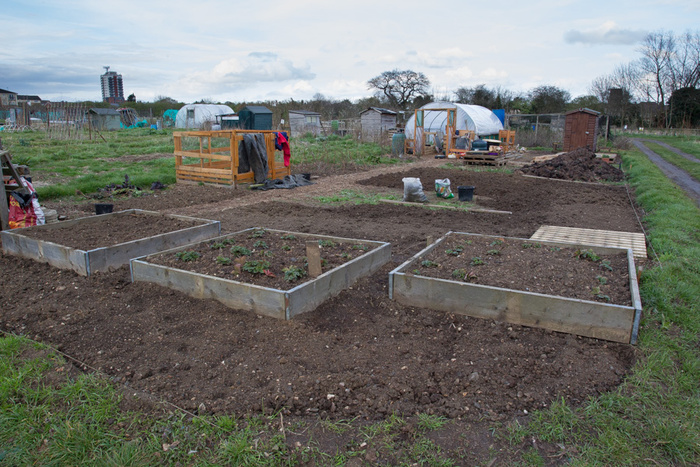
Sunday proved some welcome relief for the man with a plan, who took all his aches and pains to the first regional motocross event of the season. Monday soon arrived, with the obligatory aches and pains supplemented by some further from the previous day.
Various seeds had now made a dash for air in the dark and warm airing cupboard and these were transplanted into more suitable pots with moist compost mix and a spare area on the window sills found to accomodate.
It is quite easy to understand how a new plot holder could easily become demoralised with the extent of the dig on a new site, and having set ourselves up for a day of digging, digging and more digging, enlisted some assistance for the day. Peter Hunnable very graciously wielded an experienced spade, and starting at one end of the 'to be dug area' worked his way down the site with some alacrity towards Karen who was travelling in the opposite direction. In the meantime, the project owner had made a mad dash in what looked like seriously easy soil conditions down the outer perimeter until the manure heap reached.
Whilst all this was taking place, a good friend and neighbour, Chris Ripley, who had learnt of the mad cap idea and initially questioned my sanity, offered out some practical assistance for the day. Bribed with copious cups of tea, the offer of lunch, cakes and biscuits, set out to build what in the eyes of a novice plot holder can only be described as a 'Rolls Royce' of a potting bench from the various scraps, odds and ends of pallets strewn on the site.(no disrespect to all the other seriously good builds on site). Aside of a work surface still to be procured, this quality piece of craftwork has now been positioned in the poly tunnel awaiting many hands to make hay with all the seed and plant cultivation.
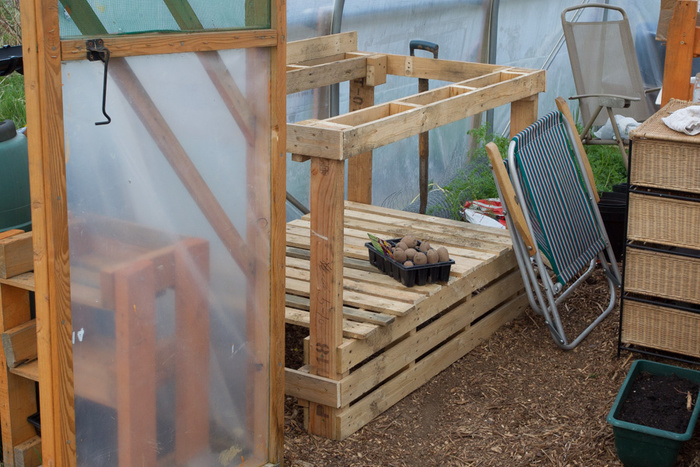
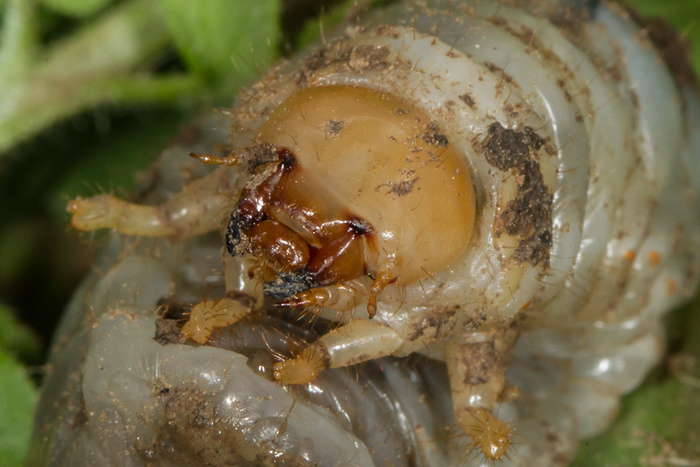
Various stops for tea, and a prolonged stop to photograph what turned out to be the larvae of a stag beetle, eventually conspired to prevent us from joining up the various strands of the dig completely, but significant forward movement had been achieved during the day and some very grateful thanks to the elegant dig from Peter, and the handiwork of our good friend Chris. The results of the days endeavour can be seen at the top of the article.
04th April 2016
In: Project 63
Sunday proved some welcome relief for the man with a plan, who took all his aches and pains to the first regional motocross event of the season. Monday soon arrived, with the obligatory aches and pains supplemented by some further from the previous day.
Various seeds had now made a dash for air in the dark and warm airing cupboard and these were transplanted into more suitable pots with moist compost mix and a spare area on the window sills found to accomodate.
It is quite easy to understand how a new plot holder could easily become demoralised with the extent of the dig on a new site, and having set ourselves up for a day of digging, digging and more digging, enlisted some assistance for the day. Peter Hunnable very graciously wielded an experienced spade, and starting at one end of the 'to be dug area' worked his way down the site with some alacrity towards Karen who was travelling in the opposite direction. In the meantime, the project owner had made a mad dash in what looked like seriously easy soil conditions down the outer perimeter until the manure heap reached.
Whilst all this was taking place, a good friend and neighbour, Chris Ripley, who had learnt of the mad cap idea and initially questioned my sanity, offered out some practical assistance for the day. Bribed with copious cups of tea, the offer of lunch, cakes and biscuits, set out to build what in the eyes of a novice plot holder can only be described as a 'Rolls Royce' of a potting bench from the various scraps, odds and ends of pallets strewn on the site.(no disrespect to all the other seriously good builds on site). Aside of a work surface still to be procured, this quality piece of craftwork has now been positioned in the poly tunnel awaiting many hands to make hay with all the seed and plant cultivation.
Various stops for tea, and a prolonged stop to photograph what turned out to be the larvae of a stag beetle, eventually conspired to prevent us from joining up the various strands of the dig completely, but significant forward movement had been achieved during the day and some very grateful thanks to the elegant dig from Peter, and the handiwork of our good friend Chris. The results of the days endeavour can be seen at the top of the article.
The Big Dig (Part 2)
03rd April 2016
The offer of help from Daryll in terms of digging over an area of Brassicas which seemed to be suffering, was delivered on the Sunday, with the uprooted specimens used to supply and feed the chickens. It has to be said that this was a great decision in terms of support and assistance, and the precision and neatness of the dig suggested that we really ought to coax some further assistance. A huge thank you for this, and the offer to further dig the area upon which the sweet corn cage is situated.
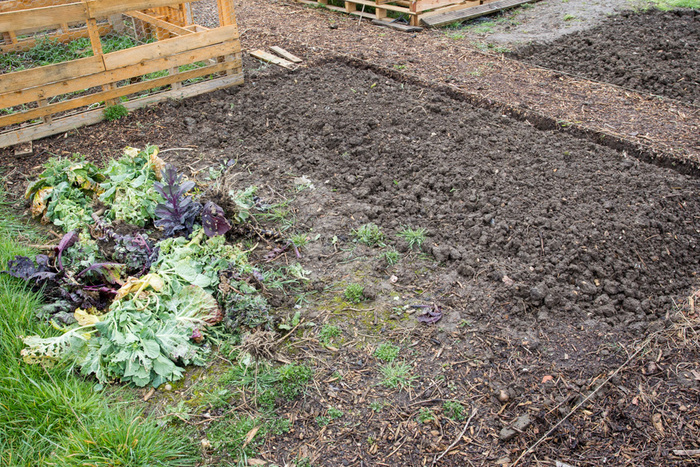
Our own progress with the dig on Saturday had been somewhat slowed by the photographing of various bugs, beasties and other specimens uncovered as we moved down the patch.
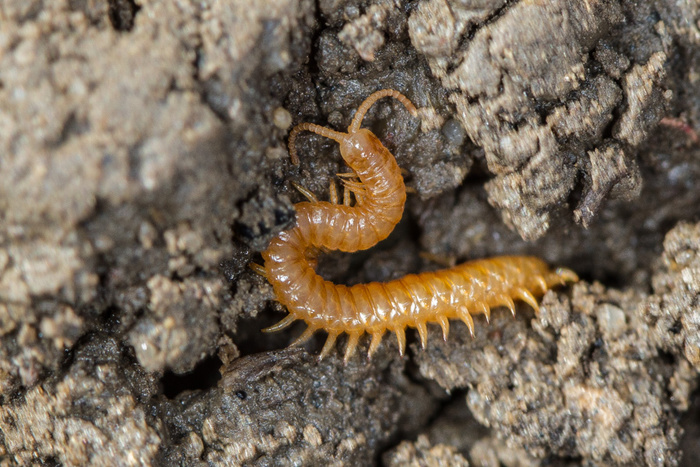
The above image of Haplophilus Subterraneus is a pale yellow / ochre species of slender centipede, with as many as 80 pairs of legs which feeds on earth and leaf mould and can range from 2.5cm to 8cm. According to the wildlife bible consulted, harmless, which is a positive as these were considerable in number.
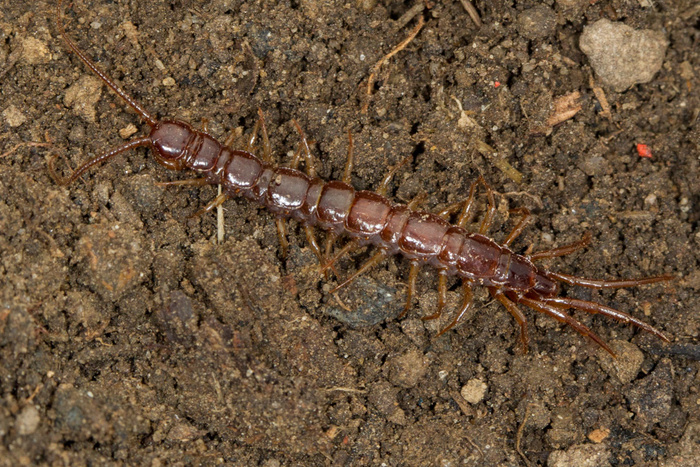
Not quite so prolific as the above, but again suggested by the bible to be harmless was this beastie Lithobius Variegates which is again suggested to live in areas of leaf litter, cracks and crevices.
We'll endeavour to upload various images of these beasties to the rogues gallery and if anyone can assist with recognition this would be greatly appreciated, so that we can tell whether they are good for the plot, or likely to cause untold damage to the produce if left (albeit a little late at this point in time).
03rd April 2016
In: Project 63
The offer of help from Daryll in terms of digging over an area of Brassicas which seemed to be suffering, was delivered on the Sunday, with the uprooted specimens used to supply and feed the chickens. It has to be said that this was a great decision in terms of support and assistance, and the precision and neatness of the dig suggested that we really ought to coax some further assistance. A huge thank you for this, and the offer to further dig the area upon which the sweet corn cage is situated.
Our own progress with the dig on Saturday had been somewhat slowed by the photographing of various bugs, beasties and other specimens uncovered as we moved down the patch.
The above image of Haplophilus Subterraneus is a pale yellow / ochre species of slender centipede, with as many as 80 pairs of legs which feeds on earth and leaf mould and can range from 2.5cm to 8cm. According to the wildlife bible consulted, harmless, which is a positive as these were considerable in number.
Not quite so prolific as the above, but again suggested by the bible to be harmless was this beastie Lithobius Variegates which is again suggested to live in areas of leaf litter, cracks and crevices.
We'll endeavour to upload various images of these beasties to the rogues gallery and if anyone can assist with recognition this would be greatly appreciated, so that we can tell whether they are good for the plot, or likely to cause untold damage to the produce if left (albeit a little late at this point in time).
The Big Dig
02nd April 2016
During the second week, various seeds planted indoors with a view that there would be something to Sow once we have prepared all the ground. The airing cupboard has been duly evacuated the new crop of potential veg, and a sneak peak every evening to see what developments have taken place.
Preparing all the ground turned out to be quite a challenge, with Karen picking the corner area of the plot to turn over.
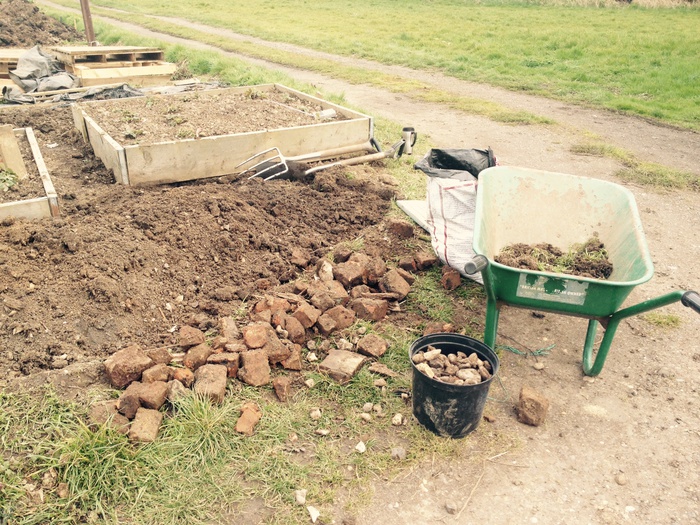
This excavation turned up various bricks, a concrete post, and other debris which in the spirit of a true green enterprise, was recycled by Peter who viewed that this little collection would make pretty decent hard core.
Yours truly continued the dig and levelling out from the newly levelled (or so we viewed at the time) raised beds, raked over, and our now copious collections of couch grass put aside as we continued to make slow progress down the plot.
A pallet placed at the top end where the intention is to build some further composting bins, and a polite enquiry made as to the availability of pallets from our good friends at Writtle Road Nursery.
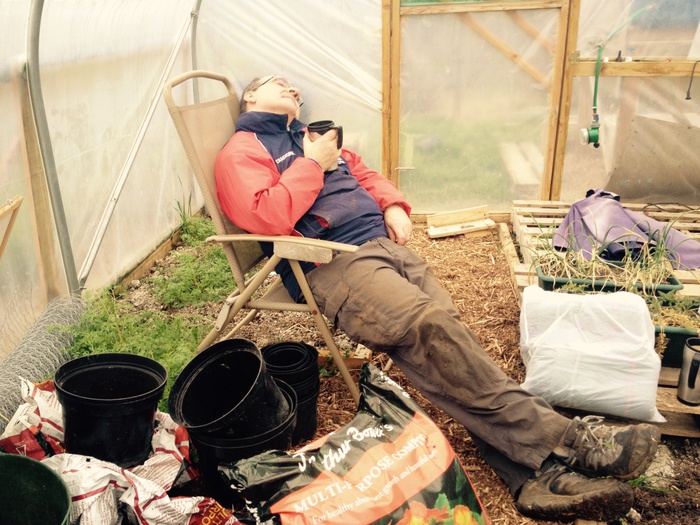
Was this all going to prove too much for the man with a plan? a constant supply of tea and biscuits was of great assistance, as was a little respite to quaff the offerings.
Dave Rowlings got truly stuck in and assisted with some of the dig which has been hugely appreciated, and whilst progress may not have been quite as quick as I may have imagined,(I think a slight over ambitious estimation in terms of where we may be) progress there has been.
photographs courtesy of Karen Lawrence
02nd April 2016
In: Project 63
During the second week, various seeds planted indoors with a view that there would be something to Sow once we have prepared all the ground. The airing cupboard has been duly evacuated the new crop of potential veg, and a sneak peak every evening to see what developments have taken place.
Preparing all the ground turned out to be quite a challenge, with Karen picking the corner area of the plot to turn over.
This excavation turned up various bricks, a concrete post, and other debris which in the spirit of a true green enterprise, was recycled by Peter who viewed that this little collection would make pretty decent hard core.
Yours truly continued the dig and levelling out from the newly levelled (or so we viewed at the time) raised beds, raked over, and our now copious collections of couch grass put aside as we continued to make slow progress down the plot.
A pallet placed at the top end where the intention is to build some further composting bins, and a polite enquiry made as to the availability of pallets from our good friends at Writtle Road Nursery.
Was this all going to prove too much for the man with a plan? a constant supply of tea and biscuits was of great assistance, as was a little respite to quaff the offerings.
Dave Rowlings got truly stuck in and assisted with some of the dig which has been hugely appreciated, and whilst progress may not have been quite as quick as I may have imagined,(I think a slight over ambitious estimation in terms of where we may be) progress there has been.
photographs courtesy of Karen Lawrence
Project 63 - Weekend Update
27th March 2016
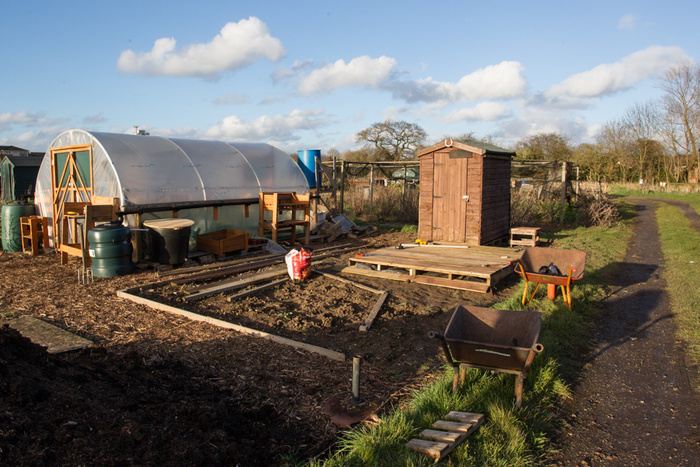
Welcome to the update post for project 63, and the author can advise that the aches and pains from the weekend's endeavour, some in places where I didn't realise it was possible to ache, have been truly worth it. Over the weekend we have had assistance from Derek, Ian, Dave, Josie and Les which have allowed us to achieve just about what I felt may be possible in three days.
A shed from a retiring plot owner was located on site this morning, on top of the area which had been painstakingly raked and flattened friday, only to find that the topography still represented something that was far from flat.
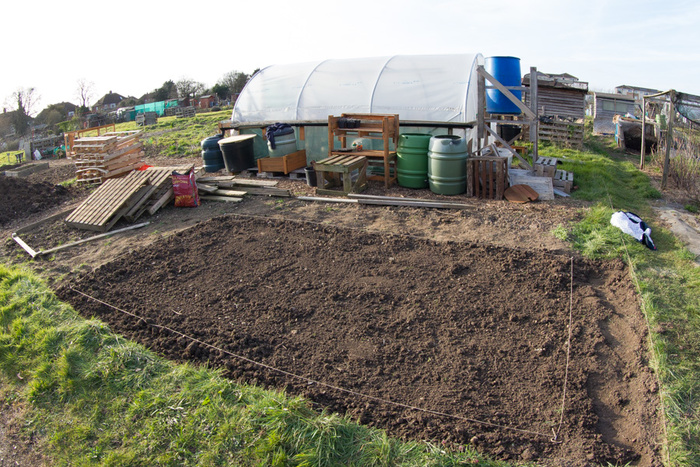
After a few adjustments, some filling and taking away, the shed was deposited just as the heavens opened. The shed posse hurtled to the poly tunnel for shelter, and after the downpour passed, secured with angle iron and fixings through the floor.
The front was then decked, although I must possess the only spirit level that has a kink in it, as every time we adjusted the soil base we then found we were out somewhere else. After much faffing about we eventually settled that the base was level (ish), cut and secured to the front area of the shed.
At the front of the plot, the raised beds were all re aligned and levelled, and the border area of the plot marked which now requires digging over and as much of the couch grass removed as possible.
With some of the area now marked out, and a rough plan left in the polly tunnel, a list of jobs to do have been inked on a whiteboard inside. We already have offers of assistance from Darryl, Peter and Dave, and hope that you may be interested to see what is going in, participate and perhaps dig in.
For all further information in relation to Project 63, please contact Karen or Ray Lawrence. We look forward to hearing from you.
27th March 2016
In: Project 63
Welcome to the update post for project 63, and the author can advise that the aches and pains from the weekend's endeavour, some in places where I didn't realise it was possible to ache, have been truly worth it. Over the weekend we have had assistance from Derek, Ian, Dave, Josie and Les which have allowed us to achieve just about what I felt may be possible in three days.
A shed from a retiring plot owner was located on site this morning, on top of the area which had been painstakingly raked and flattened friday, only to find that the topography still represented something that was far from flat.
After a few adjustments, some filling and taking away, the shed was deposited just as the heavens opened. The shed posse hurtled to the poly tunnel for shelter, and after the downpour passed, secured with angle iron and fixings through the floor.
The front was then decked, although I must possess the only spirit level that has a kink in it, as every time we adjusted the soil base we then found we were out somewhere else. After much faffing about we eventually settled that the base was level (ish), cut and secured to the front area of the shed.
At the front of the plot, the raised beds were all re aligned and levelled, and the border area of the plot marked which now requires digging over and as much of the couch grass removed as possible.
With some of the area now marked out, and a rough plan left in the polly tunnel, a list of jobs to do have been inked on a whiteboard inside. We already have offers of assistance from Darryl, Peter and Dave, and hope that you may be interested to see what is going in, participate and perhaps dig in.
For all further information in relation to Project 63, please contact Karen or Ray Lawrence. We look forward to hearing from you.
Project 63.
24th March 2016
Project 63 I hear you murmer. Sounds like Roswell, an alien invasion perhaps, or some scientific experiment that takes place behind closed doors. Well neither of these in this case.
Essex Youth Build rather reluctantly had to give up their allotment on site, plot 63. All rather sudden, and at a point of the year where planting, sewing etc pretty crucial to make the most of any plot.
The Melbourne Park Allotment Association committee quickly got together to assess whether it was practical for us to take on this plot from the council as a project. An outline idea was hatched and presented and with broad agreement, the council were approached with a view to the Association taking the plot on board. To accommodate this a charitable donation was made to Essex Youth Build, and within the space of 48 hours this week, and with everyone broadly supporting the basic principals established, project 63 was christened.
The basic tenets of the project set out to ensure that:
- all the hard work, energy and effort put into the plot by Essex Youth Build would not be wasted and the plot not slip into disrepair whilst in pursuit of new tenants
- that as the majority of existing plot holders grew sufficient product to meet their needs, that the majority of produce cultivated would be donated to charitable causes
- to encourage plot and association members to perhaps experiment with fruit and vegetables that ordinarily would be shied away from or not considered to grow or cultivate
- that with sufficient imagination and support the project may further strengthen the sense of community that exists on the Site.
The project set off in earnest on Easter Friday, and it is planned to pen a blog or diary on the web site charting the progress and activity of the project.
Please check back in regularly for further updates. For further information in terms of the aims and ambitions, or general news in relation to this development, please contact Ray or Karen. Equally if you would like to get involved, again please contact the above.
[webmaster]
24th March 2016
In: Project 63
Project 63 I hear you murmer. Sounds like Roswell, an alien invasion perhaps, or some scientific experiment that takes place behind closed doors. Well neither of these in this case.
Essex Youth Build rather reluctantly had to give up their allotment on site, plot 63. All rather sudden, and at a point of the year where planting, sewing etc pretty crucial to make the most of any plot.
The Melbourne Park Allotment Association committee quickly got together to assess whether it was practical for us to take on this plot from the council as a project. An outline idea was hatched and presented and with broad agreement, the council were approached with a view to the Association taking the plot on board. To accommodate this a charitable donation was made to Essex Youth Build, and within the space of 48 hours this week, and with everyone broadly supporting the basic principals established, project 63 was christened.
The basic tenets of the project set out to ensure that:
- all the hard work, energy and effort put into the plot by Essex Youth Build would not be wasted and the plot not slip into disrepair whilst in pursuit of new tenants
- that as the majority of existing plot holders grew sufficient product to meet their needs, that the majority of produce cultivated would be donated to charitable causes
- to encourage plot and association members to perhaps experiment with fruit and vegetables that ordinarily would be shied away from or not considered to grow or cultivate
- that with sufficient imagination and support the project may further strengthen the sense of community that exists on the Site.
The project set off in earnest on Easter Friday, and it is planned to pen a blog or diary on the web site charting the progress and activity of the project.
Please check back in regularly for further updates. For further information in terms of the aims and ambitions, or general news in relation to this development, please contact Ray or Karen. Equally if you would like to get involved, again please contact the above.
[webmaster]